Free MFT sample questions
Real questions from the AMFTRB Marital and Family Therapy National Examination practice bank, with the correct answer and an explanation for each one. No junk, no filler.
Try them in the simulator Same questions, with study, timed and flashcard modes.
Showing 6 of 12 free sample questions.
During structural-strategic therapy with a conflicted couple, the therapist successfully assists the partners in direct, calm communication. Immediately following this shift, their ten-year-old child begins having severe emotional outbursts, prompting the couple to stop discussing their relationship and focus entirely on disciplining the child. The interactional loop is illustrated below. From a general systems perspective, this dynamic demonstrates which systemic mechanism? flowchart LR Therapist[Therapist Intervenes to Disrupt Conflict] --> Dyad[Couple Communicates Calmly] Dyad --> ChildSymptom[Child Exhibits Behavioral Outburst] ChildSymptom --> ParentsUnite[Parents Unite to Discipline Child] ParentsUnite --> Homeostasis[System Returns to Baseline Balance] Homeostasis --> Dyad
A marriage and family therapist who recently finalized an acrimonious personal divorce finds themselves feeling intense irritation toward a male client who is contemplating separating from his wife. To manage the self of the therapist and uphold systemic competency, what should the clinician do FIRST?
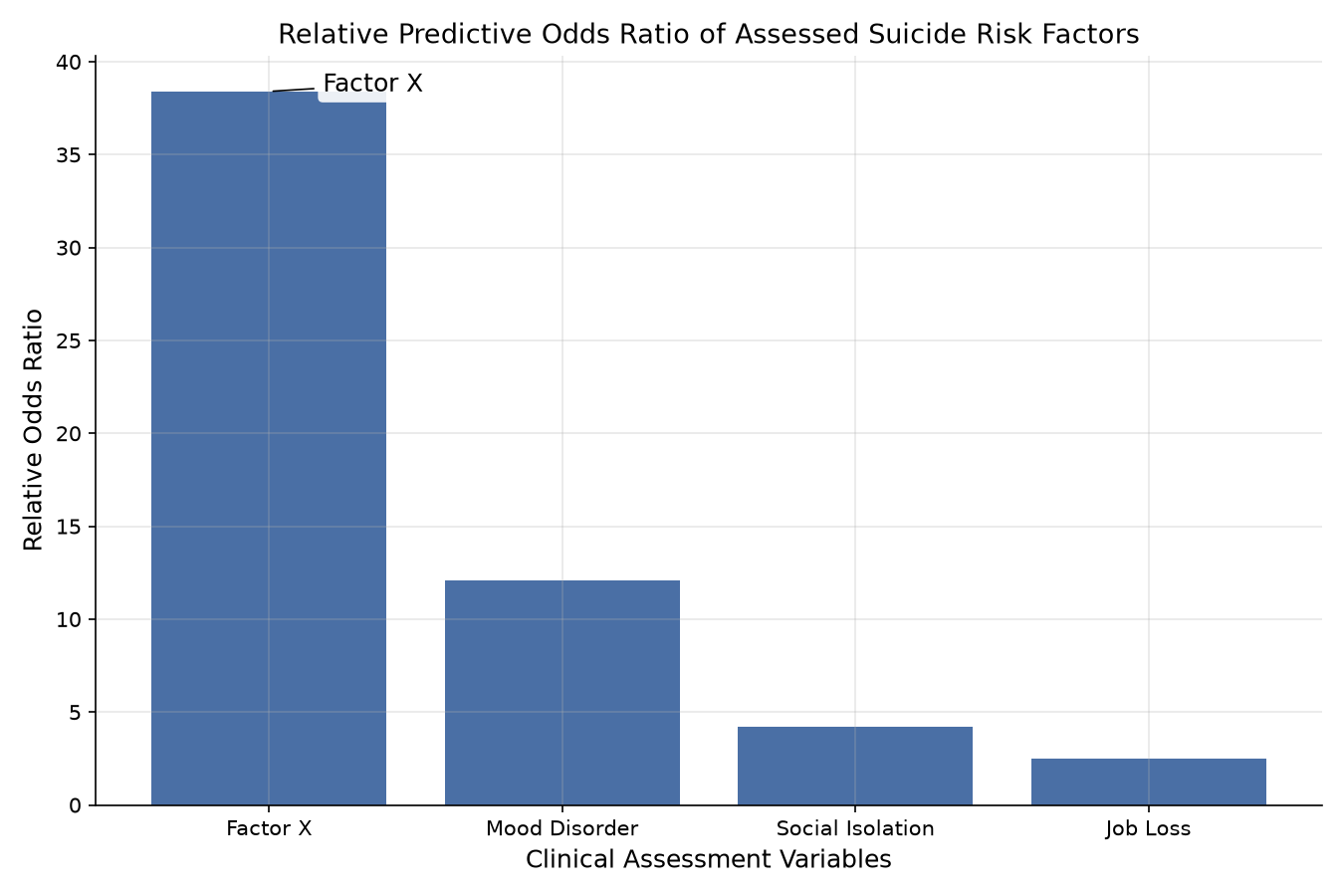
A therapist evaluates an adult client presenting with severe depressive symptoms using SAMHSA's SAFE-T framework. As depicted in the accompanying chart, Factor X demonstrates the highest predictive odds ratio for completed suicide among all clinical assessment variables. Which assessment variable corresponds to Factor X?
When conducting a comprehensive suicide inquiry as part of SAMHSA's SAFE-T protocol with a client reporting recent death ideation, which TWO actions must the clinician prioritize? (Select TWO)
A 16-year-old client reports making superficial, repetitive cuts on their forearm over the past two months to alleviate intense internal emotional numbness and anxiety, explicitly denying any wish to end their life. How should the systemic therapist clinically differentiate this presentation from suicidal behavior?
6 more free samples are waiting
Create a free account to unlock the whole MFT sample bank, or get full access to all 141 practice questions in the simulator.