Free AMB-BC sample questions
Real questions from the Ambulatory Care Nursing Certification (AMB-BC) practice bank, with the correct answer and an explanation for each one. No junk, no filler.
Try them in the simulator Same questions, with study, timed and flashcard modes.
Showing 6 of 12 free sample questions.
A 68-year-old patient with type 2 diabetes and stage 3 chronic kidney disease (CKD) visits an ambulatory clinic for follow-up. During medication reconciliation, the nurse discovers the patient regularly takes an over-the-counter remedy for chronic bilateral knee pain. Which medication represents the greatest nephrotoxic hazard and must be discontinued immediately?
An ambulatory care nurse reviews preventive screening guidelines to identify eligible primary care patients for targeted vascular screening. Based on U.S. Preventive Services Task Force (USPSTF) Grade B recommendations as displayed in the preventive criteria chart, which individual meets the indications for a one-time screening ultrasound for abdominal aortic aneurysm (AAA)?
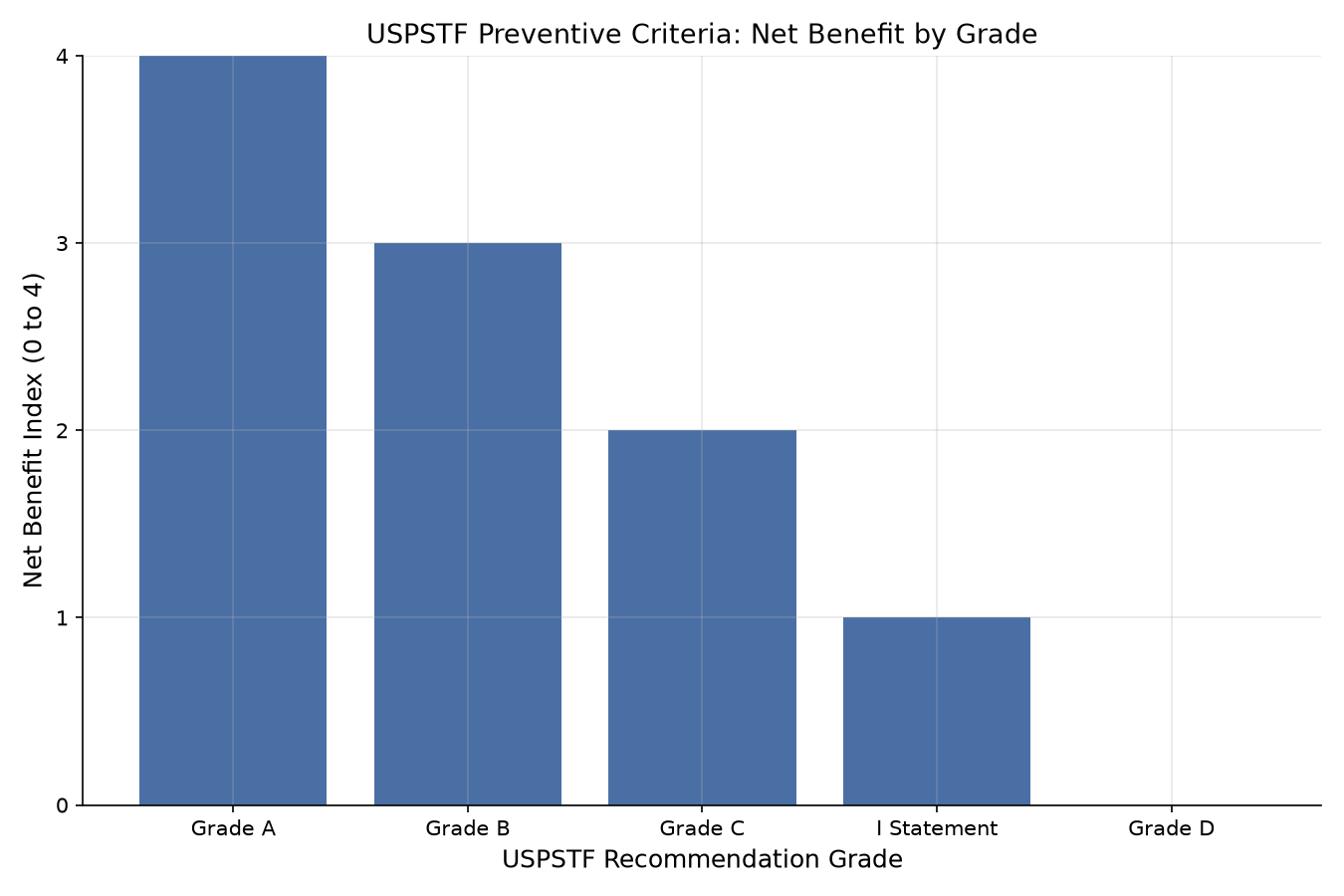
During a routine 9-month well-child examination in a primary care pediatric clinic, the nurse examines an infant whose two mandibular central incisors recently erupted. According to USPSTF Grade B recommendations for oral health in infants and children up to age 5, which clinical action should the primary care team execute?
A large community health center launches a comprehensive multi-tiered population health campaign across three surrounding urban neighborhoods. The health center serves over 24,000 enrolled patients across primary care, behavioral health, and occupational medicine divisions. The ambulatory quality committee designs four simultaneous clinical initiatives to address health disparities in chronic illness: childhood immunization tracking, asymptomatic prediabetes screening at local community centers, an intensive post-cerebrovascular stroke gait re-education and constraint-induced therapy program, and annual mammography screening reminders. The registered nurse leading the population outreach team reviews the operational taxonomy of preventive healthcare. Which of the four deployed clinical interventions represents tertiary prevention?
An ambulatory care walk-in triage nurse evaluates an adult patient brought in by acquaintances after suspected acute toxic chemical ingestion and heavy alcohol consumption. The patient exhibits slurred speech, marked combativeness, and severe tachypnea with accessory muscle retractions. Based on emergency triage prioritization standards, which physiological assessment takes precedence?
6 more free samples are waiting
Create a free account to unlock the whole AMB-BC sample bank, or get full access to all 144 practice questions in the simulator.