Free CV-BC sample questions
Real questions from the Cardiac-Vascular Nursing Certification (CV-BC) practice bank, with the correct answer and an explanation for each one. No junk, no filler.
Try them in the simulator Same questions, with study, timed and flashcard modes.
Showing 6 of 12 free sample questions.
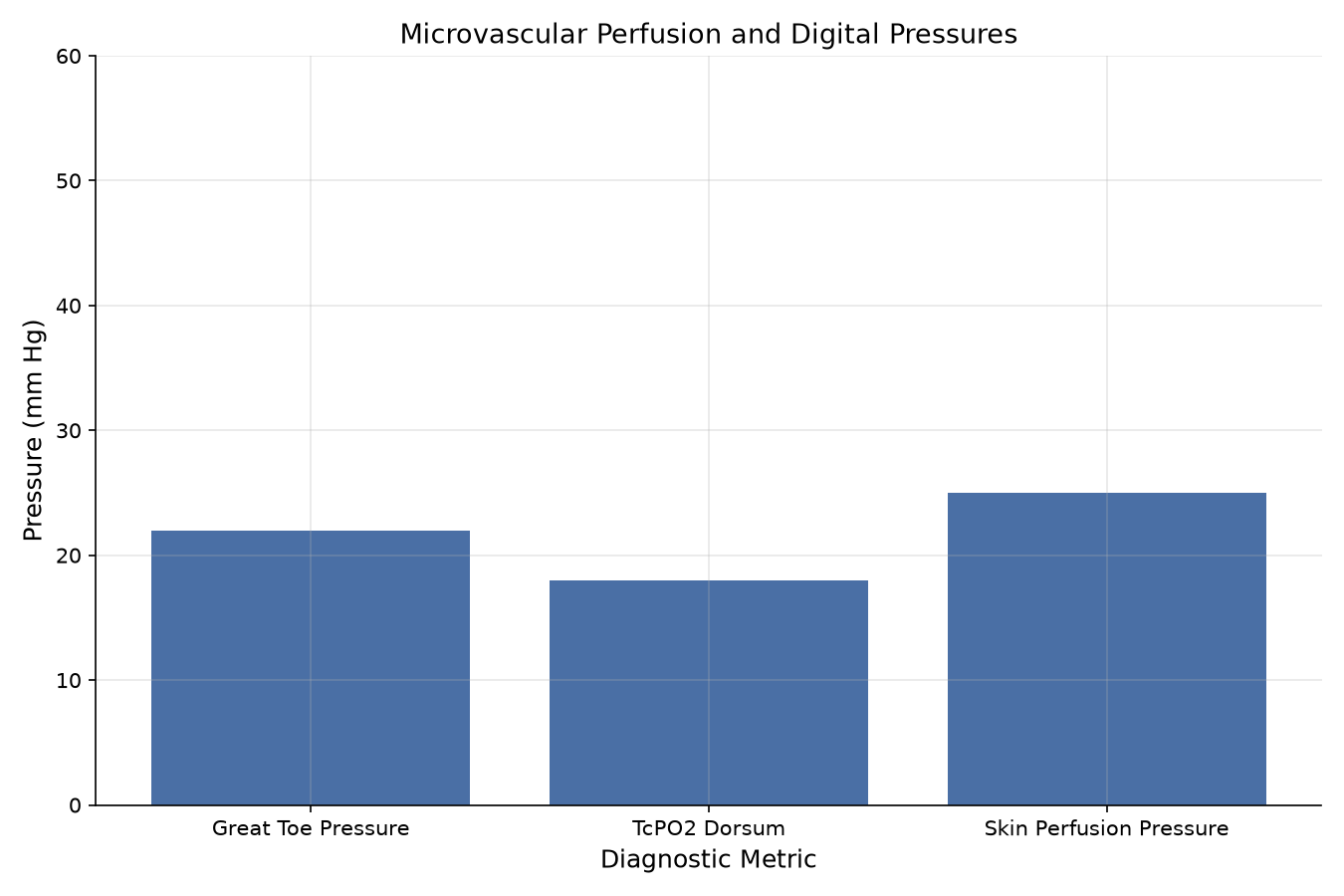
A 72-year-old patient with refractory ischemic rest pain and a non-healing dry ulcer over the right first metatarsal head is admitted to the vascular progressive care unit. Physical assessment reveals dependent rubor, pallor on limb elevation, absent palpable pedal pulses, and noncompressible tibial vessels on resting continuous-wave Doppler examination. Microvascular physiological testing is conducted in a temperature-controlled environment. The patient's microvascular perfusion parameters and digital pressures are recorded and plotted in the accompanying diagnostic report. Based on these diagnostic findings, which clinical interpretation should guide the multidisciplinary vascular care plan?
A nurse evaluates an 81-year-old patient admitted with acute shortness of breath and bilateral crackles. The laboratory reports an elevated N-terminal pro-B-type natriuretic peptide (NT-proBNP) level of 3,850 pg/mL. When interpreting this laboratory result, which noncardiac clinical factor should the nurse recognize as an established cause of elevated natriuretic peptide concentrations?
During morning clinical rounds in the cardiac progressive care unit, a resident physician suggests ordering serial creatine kinase-myocardial band (CK-MB) and serum myoglobin assays alongside high-sensitivity cardiac troponin I (hs-cTnI) for a patient presenting with unstable retrosternal chest pain. Which statement reflects current evidence-based practice guidelines regarding biomarker testing for acute myocardial injury?
True or False: On a standard 12-lead electrocardiogram, the presence of a prolonged PR interval (first-degree atrioventricular block) and voltage criteria indicative of left ventricular hypertrophy are established independent predictors for the subsequent development of atrial fibrillation.
A nurse is developing a discharge care plan for a 64-year-old patient newly diagnosed with heart failure with reduced ejection fraction (HFrEF; left ventricular ejection fraction 32%, NYHA functional class II). According to the ACC/AHA/HFSA guidelines, which FOUR foundational pharmacologic drug classes constitute guideline-directed medical therapy (GDMT) proven to reduce all-cause mortality and hospitalizations? (Select FOUR)
6 more free samples are waiting
Create a free account to unlock the whole CV-BC sample bank, or get full access to all 158 practice questions in the simulator.