ITIL 5 Release Date Milestones Ranked by Study Impact
By PrepHoot Editorial Team· (updated Oct 14, 2026)

If you’re searching for itil5 release dates while studying around a full-time job, you need to know which dates change your exam plan. February 12, 2026 is the launch date identified in Joseph Reich’s January 30 Version 5 launch post. That’s a secondary-source report. It does not, by itself, establish the first official Foundation exam date, every module’s availability, or an ITIL 4 retirement deadline.
The distinction matters. A framework announcement can tell you that a new version exists. Your exam booking determines which version you’ll sit. A transition notice determines whether an older route has a deadline.
I’ve ranked the milestones by how directly they affect your choice of syllabus, study materials, and exam date. The scores below are editorial judgments about scheduling impact. Foundation availability comes first, followed by transition deadlines, the Bridge route, advanced modules, and the dated explanation of the framework’s changes. Where an exact date remains unresolved in the cited evidence, I’ve kept it unresolved.
1. Foundation booking availability determines your study version
Foundation availability earns a study-impact score of 5/5 because it determines what you should prepare for next. For a new candidate, the useful milestone is the point at which the intended exam can be booked with the matching syllabus and materials.
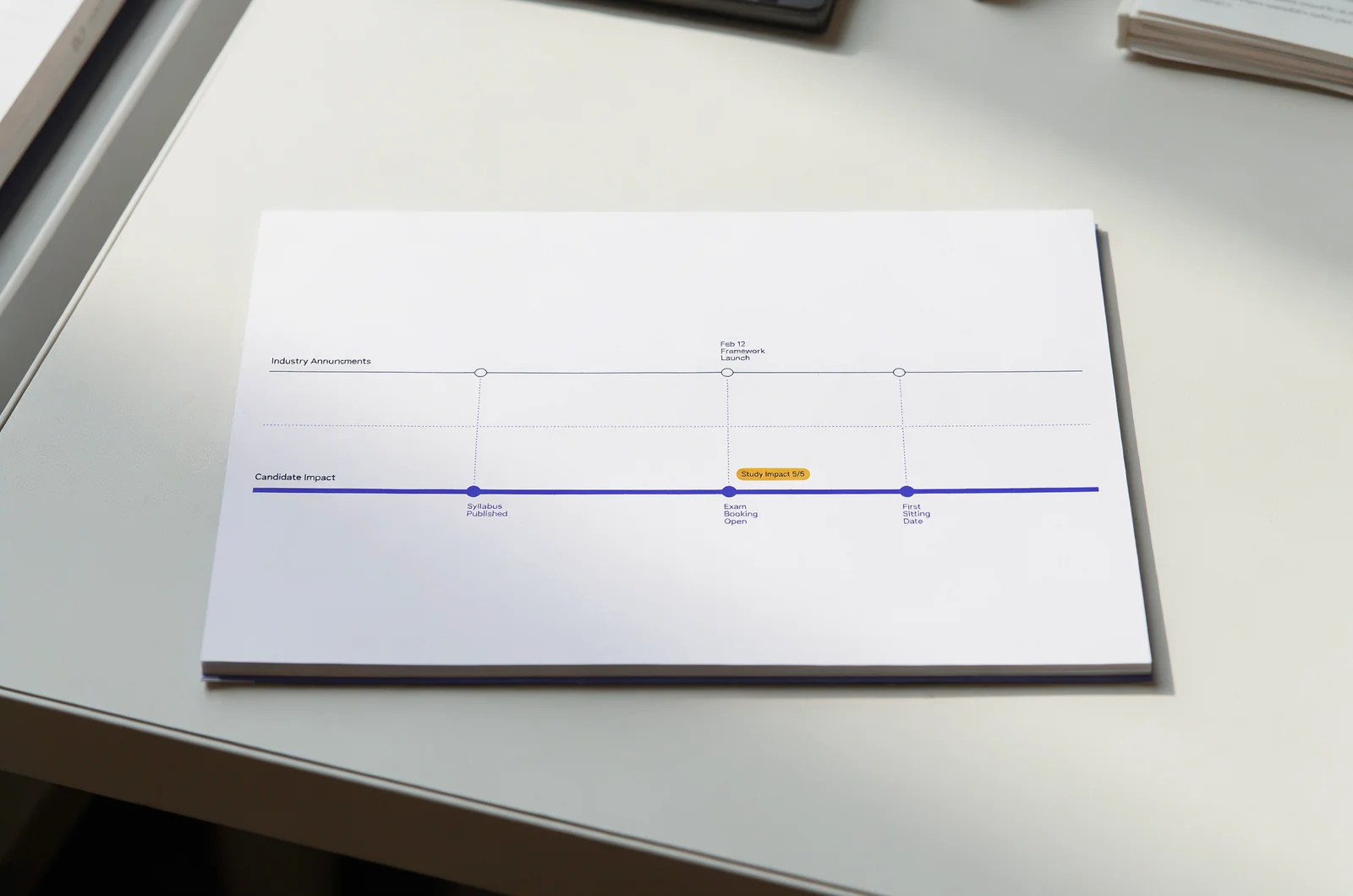
The reported February 12, 2026 launch date is useful rollout context. However, a framework launch, a training course’s first session, and an exam’s first available appointment are separate events. One date should not stand in for all three.
Starting from scratch
If you haven’t bought training or an exam yet, start with the exact qualification name on the booking page. Compare that name with the syllabus, course description, and practice material you intend to use.
PeopleCert’s Foundation description emphasizes digital product and service management across the full lifecycle. That makes version identification more useful than a course’s general promise to teach service management. Use the official ITIL website as the starting point for locating the qualification information.
A new learner should settle the version before building a revision schedule. Otherwise, an inexpensive older question bank can create extra work when its terminology or coverage differs from the intended exam.
Already preparing for ITIL 4
If you already have an ITIL 4 booking, the new framework’s launch alone is insufficient reason to abandon your preparation. First establish whether your purchased exam remains available and whether changing versions would affect your voucher or course access.
This milestone fits new candidates most directly. Its limitation is that the reported launch date does not resolve your individual booking conditions.
My recommendation is to use February 12 as a reported rollout marker, then base your study calendar on the qualification named in your actual booking. Save the matching syllabus beside your revision plan.
2. An ITIL 4 transition deadline would create the hardest cutoff
An ITIL 4 transition deadline also has a potential study-impact score of 5/5. It ranks second because its effect is conditional: it matters most to someone finishing an older route, and the cited dates do not establish that cutoff.
A confirmed retirement date could determine whether you finish your existing preparation, bring an exam forward, or change routes. A new-version announcement cannot answer those questions on its own.
Separate four different dates
When you encounter a transition announcement, identify exactly what ends:
- The sale of an exam voucher.
- The opportunity to book an exam.
- The opportunity to sit an exam.
- Access to a particular course or training package.
Those events may have different conditions. Treating them as one deadline can produce an avoidable scheduling mistake.
For example, suppose your intended exam falls several weeks after a training package’s advertised end date. You need to establish whether that date concerns course enrollment, material access, or exam delivery. The advertisement alone does not settle it.
Protect an existing study investment
This milestone is most relevant if you have already paid for ITIL 4 preparation or are planning a retake. Before changing direction, record your intended exam date, voucher expiry, and any applicable transition notice.
The limitation is straightforward: no exact ITIL 4 retirement deadline is established by the launch report and dated framework explanation cited in this article. That does not establish indefinite availability either.
I would keep an existing preparation plan provisional until the booking conditions are clear. If a confirmed cutoff applies, work backward from the last permitted sitting date and leave room for any retake you intend to allow. Write the deadline’s exact meaning beside the date.
3. The Foundation Bridge changes the route for existing holders
The Foundation Bridge earns a study-impact score of 4/5 for an ITIL 4 Foundation holder. Its importance comes from the route it describes rather than a substantiated first-release day.
PeopleCert’s Foundation listing describes the ITIL Foundation Bridge (Version 5) as a route for ITIL 4 Foundation holders that focuses on changes introduced at Foundation level. ITIL’s guidance for certified professionals provides the official transition context.
Decide whether the Bridge fits your starting point
For someone who already holds ITIL 4 Foundation, I would assess the Bridge before budgeting for a full Foundation course. The decision depends on eligibility, what the route covers, and the qualification needed for your next goal.
For a first-time candidate, the relevant decision remains the full Foundation route. A route intended for existing holders should not become your default merely because its description sounds shorter.
There is also a difference between having studied ITIL 4 and holding the required certification. Check the stated eligibility against your certificate record.
Budget from the actual package
The supplied description does not establish an exact Bridge launch date, exam price, question count, or required study duration. A focused scope is insufficient evidence for a particular number of preparation hours.
If you’re comparing packages, check whether each includes the exam, learning materials, and the access period you need. Then estimate your preparation time from the published learning requirements and your familiarity with the changed concepts.
This milestone fits existing Foundation holders best. My recommendation is to compare the Bridge with a full Foundation route before purchasing another course, and record the eligibility requirement alongside the package name.
4. Advanced module availability matters when you need the next qualification
Advanced module releases earn a study-impact score of 3/5 for the typical Foundation candidate. They matter more if you already have a specific designation in mind.
In its February 27, 2026 AI and cloud explanation, ITIL states that the Managing Professional, Strategic Leader, Practice Manager, and Master designations remain. It also describes new modules supporting the updated framework.
That confirms continuity in designation names. It does not establish an exact release date for every module or prove that every earlier prerequisite remains unchanged.
For someone preparing only for Foundation, uncertainty about later modules usually has less immediate scheduling impact than choosing the correct entry exam. You can make the Foundation decision without treating an entire advanced pathway as already available.
For an existing certificate holder, the order reverses. Your next module’s availability and eligibility may determine whether a proposed transition route helps you progress.
This milestone’s limitation is the absence of a complete, substantiated module-by-module calendar in the cited material. I would avoid attaching an assumed release month to an unnamed advanced exam.
Build your pathway around the specific qualification you need. Record its exact name, prerequisite, available course date, and available exam date. If one remains unresolved, mark that part of your calendar as provisional. Confirm the next module’s entry requirement before paying for preparation intended to satisfy it.
5. February 27 explains why older materials need a closer check
The February 27, 2026 framework explanation earns a study-impact score of 2/5. It helps you assess material relevance, although its publication date is not an exam activation date.
ITIL’s dated explanation connects Version 5 with changes brought by cloud and AI. It also describes a more joined-up approach to delivering digital products and services. Those statements provide a reason to check whether an older resource matches the exam you intend to take.
Use the explanation as context
A framework article helps explain the direction of change. Your exam syllabus should determine the boundaries of your preparation.
For example, reading that AI has a larger place in the framework does not establish that every question bank needs a particular percentage of AI questions. Nor does it prove that an older service-management concept has disappeared.
Avoid turning broad announcements into invented exam weights or topic lists.
Check relevance before adding study hours
This milestone fits anyone considering older books, archived courses, or previously purchased practice questions. Compare those resources with the intended version’s learning requirements.
The limitation is that the February 27 article explains the framework’s direction rather than providing a complete exam-objective comparison.
My recommendation is to keep an older resource where it supports the current syllabus and replace or supplement it where the match breaks down. For practice questions, check whether explanations use the intended version’s concepts. A recently updated webpage date alone is insufficient evidence that its questions were rewritten. Record the resource’s stated exam version before using its score to judge readiness.
Build a study calendar from your booking and your starting point
Your ITIL study calendar should combine the rollout information with two personal facts: what you already hold and what you intend to sit. A launch anniversary is less useful than a confirmed exam appointment.
The following schedules are planning examples. They are not official preparation requirements or predictions of how quickly you’ll be ready.
A new Foundation candidate with four weeks available
In a hypothetical four-week plan, I would use the first week to establish the exam version and organize the matching syllabus into manageable study sessions.
The second week could concentrate on understanding concepts and explaining them in your own words. During the third, practice questions can reveal distinctions you’re still confusing. Reserve the fourth for mixed practice, error review, and timed rehearsal where appropriate to the exam format.
You could divide a weekday’s study into two 25-minute sessions if that fits around work. Use one for learning and the other for recall or reviewing mistakes. Adjust the calendar when a topic needs more attention; the example is a scheduling aid rather than a readiness threshold.
Keep a short error log with the concept tested, why your answer failed, and what would distinguish the correct answer next time. The principles in this guide to focused question practice can help structure those sessions.
An ITIL 4 candidate approaching an existing exam
Begin with the booking conditions and any applicable deadline. Then assess whether you can explain the tested concepts without relying on memorized answer positions.
If the exam remains available under your booking, use your remaining time to address identified gaps. If a confirmed transition condition changes that plan, calculate the effect before buying replacement materials.
A launch announcement alone should not become evidence that your current preparation has lost its value. Make the decision from the qualification, availability, and deadline that apply to you.
An existing holder assessing the Bridge
Start with eligibility and the changes the Bridge covers. Allocate your study time to those requirements, then use practice to identify where earlier knowledge needs updating.
If you use PrepHoot or another practice platform, confirm the exact exam version before treating its questions as relevant. This article does not establish that any particular platform has a current Version 5 question bank.
A useful interactive planner would ask for your existing certificate, intended qualification, weekly study hours, and verified booking dates. It could distinguish confirmed dates from provisional ones and flag missing eligibility information. Keep unresolved dates visibly provisional in your own calendar too.
Questions that affect an ITIL transition plan
These questions separate the release date from the decisions that can change your study budget.
Is February 12, 2026 the confirmed Foundation exam release date?
The cited January 30 LinkedIn post identifies February 12 as the Version 5 launch date. That secondary-source statement does not establish the first official Foundation exam sitting date.
Use it as a reported launch marker. Establish exam availability through the qualification’s official booking information before scheduling your preparation around that day.
Does the new release mean my ITIL 4 certificate has expired?
A framework release date alone does not establish your certificate’s status. Certification status, renewal requirements, and exam availability are separate questions.
Check your individual record and the applicable certification terms. Do not infer an expiry date from the arrival of a newer framework version.
Should I postpone Foundation until every advanced module has a date?
For a Foundation-only goal, I would focus on the available qualification and its matching syllabus.
If a particular advanced module is central to your plan, establish its prerequisites and availability before committing to the whole pathway. Retained designation names do not, by themselves, confirm unchanged progression rules.
Can I prepare with an ITIL 4 question bank?
Use it only where you can establish a match with the intended syllabus. Older questions may support familiar concepts, but they cannot demonstrate complete coverage of a newer exam.
Label the resource by version, check its explanations, and measure readiness with material that matches the qualification you have booked.
Certification timing and governance exam budgets
- Security+ practice test timing changes
- COBIT 5 Foundation exam costs
- CIA Part 3 Vs Part 2: Scope, Question Style And Study Hours
Try the free sample questions, then create a free account or purchase full access or a membership for the exam they are preparing for. Get started |  |