Tableau TDS-C01 Exam Questions Format Shifts in Latest Update
By PrepHoot Editorial Team· (updated Oct 30, 2026)

Claims that the tds-c01 exam has changed its question format remain unverified in the material available for this October 2026 report. No dated official Tableau announcement or candidate-guide revision accompanies the proposed changes to question wording, visual interpretation items, or multiple-response proportions. For Tableau Desktop Specialist candidates, the immediate consequence is practical: there is insufficient evidence here to justify replacing study materials, changing pacing targets, or moving an exam appointment.
That limitation matters. A report about a format change should identify what changed, when it takes effect, and which candidates it affects. Those details are unresolved here. The sections below separate the proposed changes from the evidence needed to act on them.
The format-change claim has no dated official backing
The alleged Tableau exam update lacks the documentation needed to report it as a confirmed change. There is no supported before-and-after comparison of official exam specifications in the available record.
What remains unconfirmed
The proposed account describes adjustments to question formatting, visual interpretation, and the proportion of questions requiring multiple answers. However, it supplies no official wording establishing any of those adjustments.
Several practical details are also missing:
- The publication date of an official change notice.
- The effective date for affected exam appointments.
- The previous and revised descriptions of question types.
- Any published rule governing the distribution of multiple-response questions.
Without those details, a precise statement about a new format would overstate the evidence. The same applies to claims about revised question counts, time limits, scoring, software access, or hands-on tasks. None is established by this report.
What that means for an existing study plan
An unverified update does not establish that the exam is unchanged. It establishes a narrower point: the claimed change has not been demonstrated here.
I would keep an existing preparation schedule while checking its assumptions against official exam information. That includes identifying where a practice provider obtained its format description and whether the description carries a date.
Candidates should preserve the distinction between uncertainty and confirmation. An announcement without an effective date cannot settle which appointment it covers. A practice-bank update without an official reference cannot establish a vendor policy change.
Keep a record of the exam information used for your booking, including the document title, revision date if present, and the appointment confirmation.
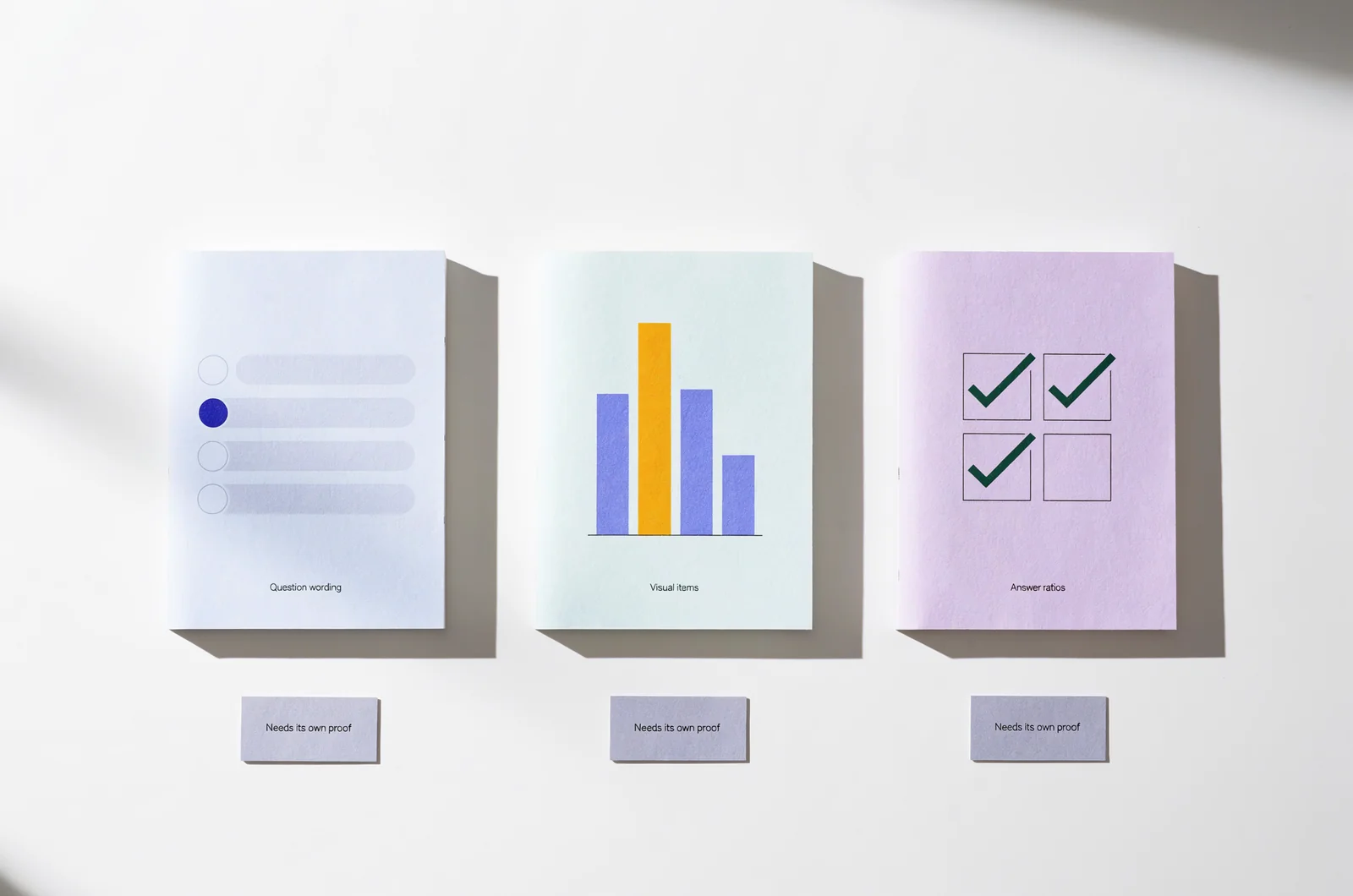
Question wording, visual items, and answer ratios need separate proof
The three proposed changes concern different parts of an exam experience. Evidence for one would not automatically establish the others.
Wording changes do not establish a new question type
A question can receive clearer instructions, different terminology, or revised answer choices while retaining the same response method. A publisher can also rewrite practice questions without any corresponding change to the certification exam.
To substantiate a change in question formatting, a report needs to identify the specific difference. Does the candidate select one answer, select several answers, interpret an exhibit, or perform an action? A general statement that questions have become more practical does not resolve that distinction.
Until an official description supports the claim, candidates should avoid treating unfamiliar practice wording as evidence of a redesigned exam.
A visual question does not establish a hands-on task
A question containing a chart or screenshot can still require a selected answer. A hands-on task requires the candidate to perform actions in software or another working environment. These formats create different preparation needs.
Consider a hypothetical practice question showing a chart and asking which statement its labels support. That exercise requires careful interpretation. It does not, by itself, demonstrate that candidates will create or modify a workbook during the certification exam.
The available evidence does not establish a newly introduced visual format or hands-on component. Claims about either would need explicit documentation.
For preparation, label an exercise according to what you actually do: interpret an image, choose an answer, or complete a software task.
A practice mix does not establish an exam-wide ratio
A practice set’s proportion of multiple-response questions describes that practice set. It cannot establish the distribution on the certification exam without supporting vendor information.
The distinction matters because response formats affect how candidates allocate attention. Questions requiring several selections call for careful reading of both the instructions and each option. That observation provides no basis for inventing a percentage.
There is no supported multiple-response ratio in this report. Any precise distribution presented as part of the alleged update should therefore remain unconfirmed.
When evaluating a practice provider’s ratio claim, ask whether it represents an official specification or the provider’s own content balance.
The effective date would determine which candidates are affected
A genuine Tableau format announcement would still need a clear validity window before candidates could apply it to their own plans.
A publication date is not an exam transition date
A document’s publication date tells readers when that document appeared. An effective date tells candidates when a stated change applies. Those dates can answer different questions.
A revised webpage might also contain several kinds of edits. Some could concern exam content; others could clarify registration instructions or correct wording. A recent timestamp alone does not establish a structural exam change.
The available record supplies no transition date for the alleged adjustments. It therefore cannot identify a group of appointments that will use a revised format.
Candidates comparing documents should record the passage that changed alongside its date. Comparing timestamps without comparing the relevant text leaves the central claim unresolved.
Existing appointments need their own confirmation
For someone already booked, the useful question is specific: does a documented revision apply to this exam appointment?
That question requires the exact exam identity and any applicable transition language. A general update about Tableau training, product releases, or another credential would not settle it.
I would avoid moving an appointment solely because a practice page carries a recent update label. First establish whether the underlying exam specification changed and whether the stated effective date covers the booking.
If official information appears inconsistent, use the appropriate certification or booking support channel to clarify the conflict. Preserve the conflicting wording so the question can be answered precisely.
Before changing a reservation, obtain confirmation of the exam, the stated change, and its effective date.
Practice publishers cannot establish Tableau’s testing rules
A revised question bank may be useful, but its revision is a separate event from an official exam change. That distinction should remain visible wherever practice products describe themselves as updated.
A revised bank can reflect an editorial change
Practice content can change because a publisher corrects an explanation, replaces an unclear image, reorganizes questions, or adjusts its own coverage. Those are possible editorial reasons, rather than documented events in this case.
A meaningful revision note should identify what the publisher changed and why. If it claims alignment with a vendor update, the supporting official document should be identifiable.
PrepHoot’s answer explanations can support the review of practice responses. The existence of explanations or a revised practice set does not establish Tableau’s current exam rules.
Candidates comparing materials should therefore separate two questions: whether the content explains the subject clearly, and whether its claims about the live exam have official support.
Ask for a revision note that names the affected material and the basis for the change.
Scores need a stable basis for comparison
A score from a revised practice set may require additional context before you compare it with an earlier result. The sets could differ in question difficulty, subject coverage, or response instructions.
For example, an unfamiliar wording style could expose a reading problem rather than a newly introduced knowledge requirement. A different question mix could also make an overall percentage less informative about a particular weak area.
A useful practice test result review should examine the reasons behind missed answers. Record whether each error involved knowledge, interpretation, response instructions, or time pressure.
When comparing attempts, retain the question-set version if available. Also note whether you had previously seen the questions or their explanations.
Use the error record to decide what to revisit before assigning significance to a score change.
An unverified update is a weak reason to buy replacement material
For candidates studying around a full-time job, the immediate risk is wasted preparation time and spending. The alleged format shift does not currently provide a documented reason to start over.
Keep useful material until a specific mismatch is established
A claim that an exam has changed can make existing resources feel obsolete. That conclusion requires more evidence than an update label or a different-looking practice question.
The useful comparison is between a resource’s coverage and a documented exam requirement. If a mismatch is identified, the next question is its scope. A limited gap may call for focused review rather than a complete replacement.
No such official coverage comparison is available here. This report therefore cannot identify a newly required topic or declare a particular resource outdated.
Before paying for replacement material, identify the exact requirement your current resource fails to address. Write it down beside the official wording and the relevant date.
Match practice modes to the difficulty you observe
Candidates can still respond to problems demonstrated by their own practice results. That decision does not require assuming a new exam format.
PrepHoot has study, timed, and flashcard modes. Those modes provide different ways to organize preparation, but their availability makes no claim about the live Tableau interface or its current specifications.
The distinction between flashcards and timed exams is relevant when deciding whether a session should emphasize recall or performance under a time limit.
Keep any practice timing assumption separate from a verified exam limit. A timer selected for a study session is a training choice unless current official information supports it.
Choose the next session based on a recorded difficulty, such as slow interpretation or uncertain terminology, and record whether that difficulty improves.
A confirmed update would need a traceable change record
A reportable Tableau format change would need evidence that connects the exam, the revised rule, and its validity date. The missing information is specific enough to describe.
The documentation needed to establish the change
A substantiated update would identify the official publication and reproduce or accurately summarize the relevant passage. It would distinguish a newly introduced requirement from a clarification of an existing one.
The documentation should allow candidates to answer these questions:
- Which exam or credential does the notice name?
- What response format or testing requirement changed?
- What previous wording supports the comparison?
- When does the revision apply?
- What does the notice say about existing appointments?
Some announcements may not answer every scheduling question. Any remaining uncertainty should be stated beside the claim rather than filled with assumptions.
A short notice about one format detail would also support a narrower article than a full account of changed question distributions. Report only the scope the document establishes.
A change tracker could make the decision clearer
A useful interactive checklist would let candidates enter the official document title, revision date, effective date, affected requirement, and appointment date. Each field could remain marked unconfirmed until supporting information is entered.
Such a tool would organize evidence. It should not predict question proportions or infer eligibility from incomplete dates.
The immediate reporting position remains unchanged: the material available here does not establish a recent structural update. A later report should identify the official notice and explain precisely which earlier statement it replaces.
Retain both document versions when a before-and-after comparison becomes available.
Booking decisions still need exam-specific answers
Candidates considering a schedule change need answers tied to their own exam. The unresolved format claim cannot supply those answers.
Should I postpone because a practice bank looks different?
A different-looking practice bank is insufficient evidence of a change affecting your appointment. First determine whether the publisher changed its presentation, its coverage, or its description of the certification exam.
If the publisher points to an official revision, compare that revision with your booking information. If it provides no identifiable basis, treat the claimed alignment as unconfirmed.
A postponement decision may involve other personal factors, but this report establishes no format-change reason to move an appointment. Check the applicable booking terms before making a scheduling decision.
Can an explanation establish that a question matches the current exam?
An explanation can help you assess the reasoning behind a practice answer. Establishing current exam alignment requires a separate connection to the applicable official requirements.
PrepHoot’s free sample questions can help readers inspect how a practice question and its explanation are presented. A sample does not establish the current live exam’s question count, interface, scoring, or format distribution.
For any provider, examine the stated exam identity, revision information, and explanation quality separately. Where a product makes a time-sensitive alignment claim, identify the dated official document behind it.
Keep the exam appointment, the official specification, and the practice product’s revision record distinguishable in your notes.
Recall, pacing, and practice-result review
Try the free sample questions, then create a free account or purchase full access or a membership for the exam they are preparing for. Get started |  |